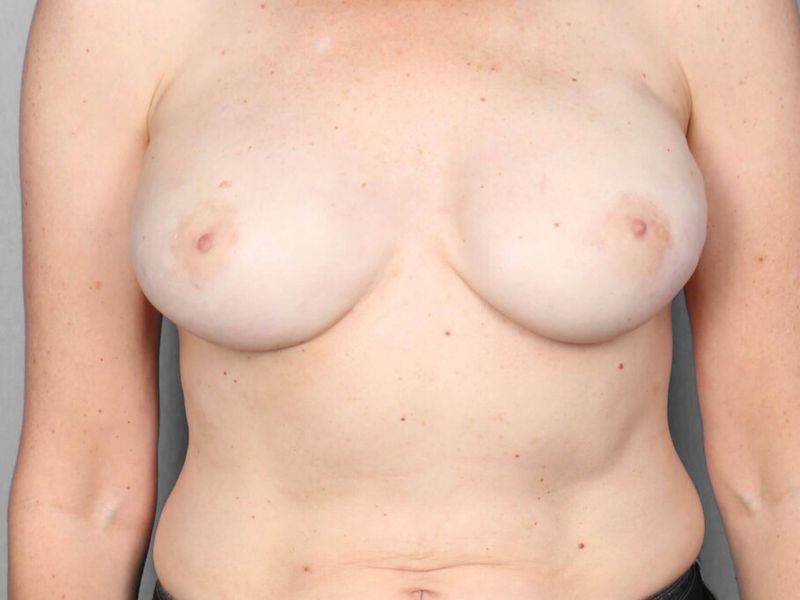
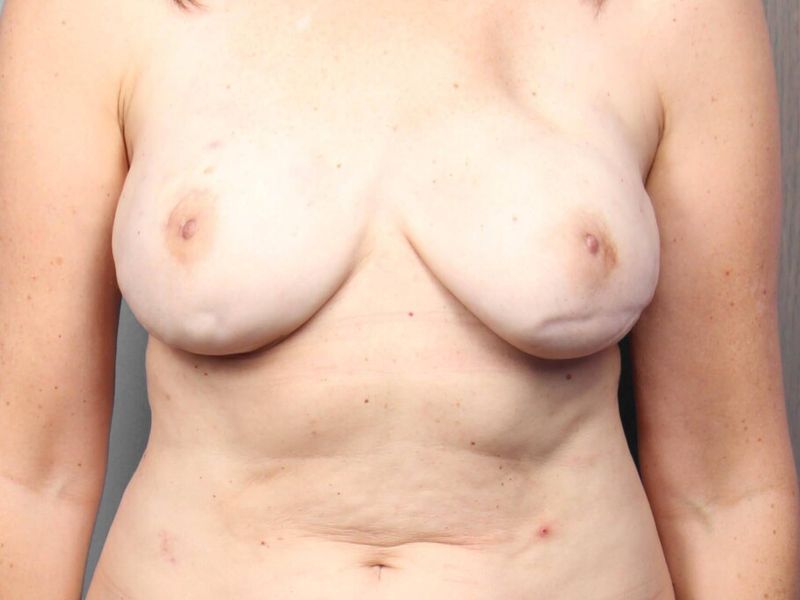
Case #1355 · Toronto, Ontario
Fat Grafting Breast Reconstruction
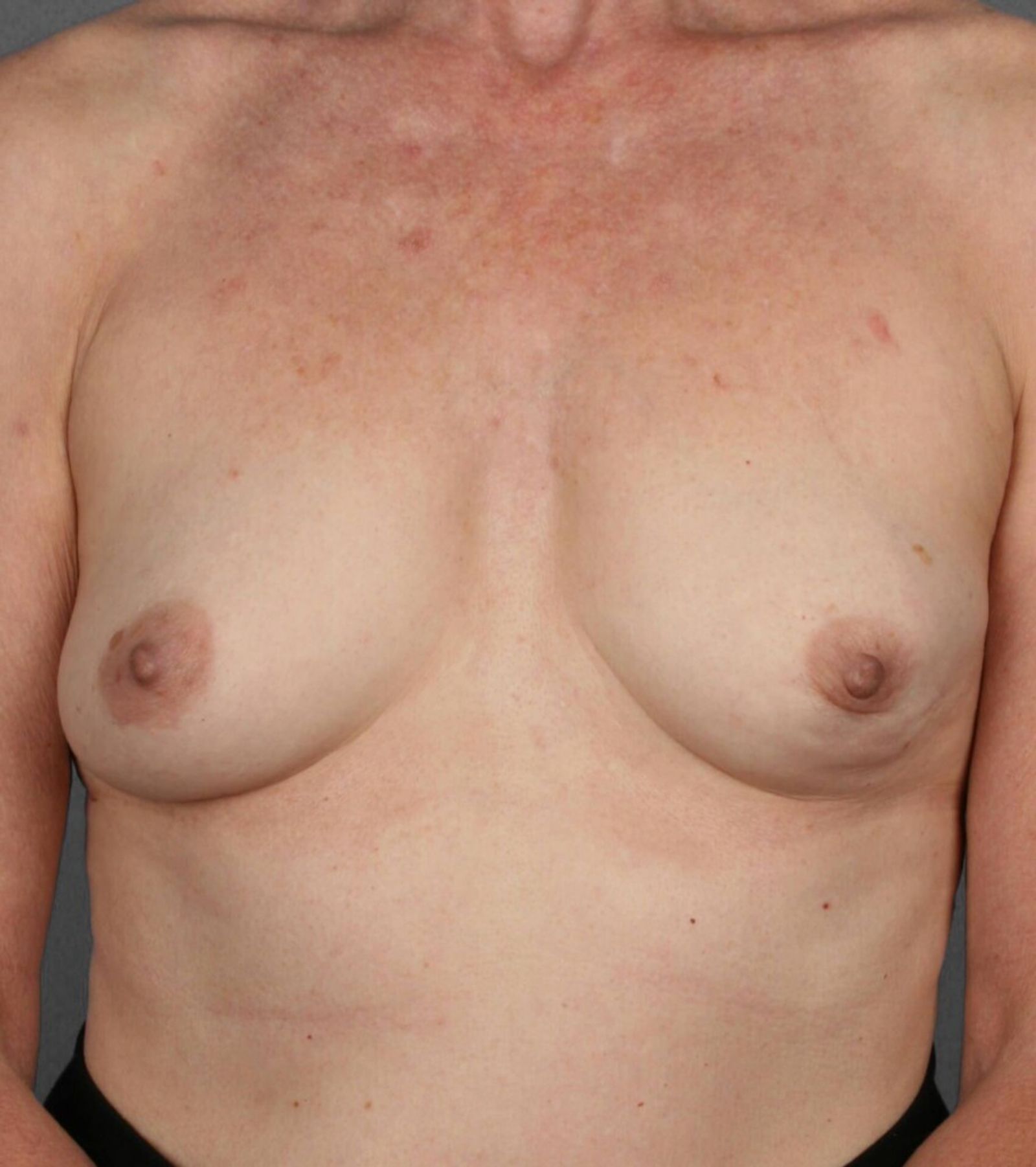
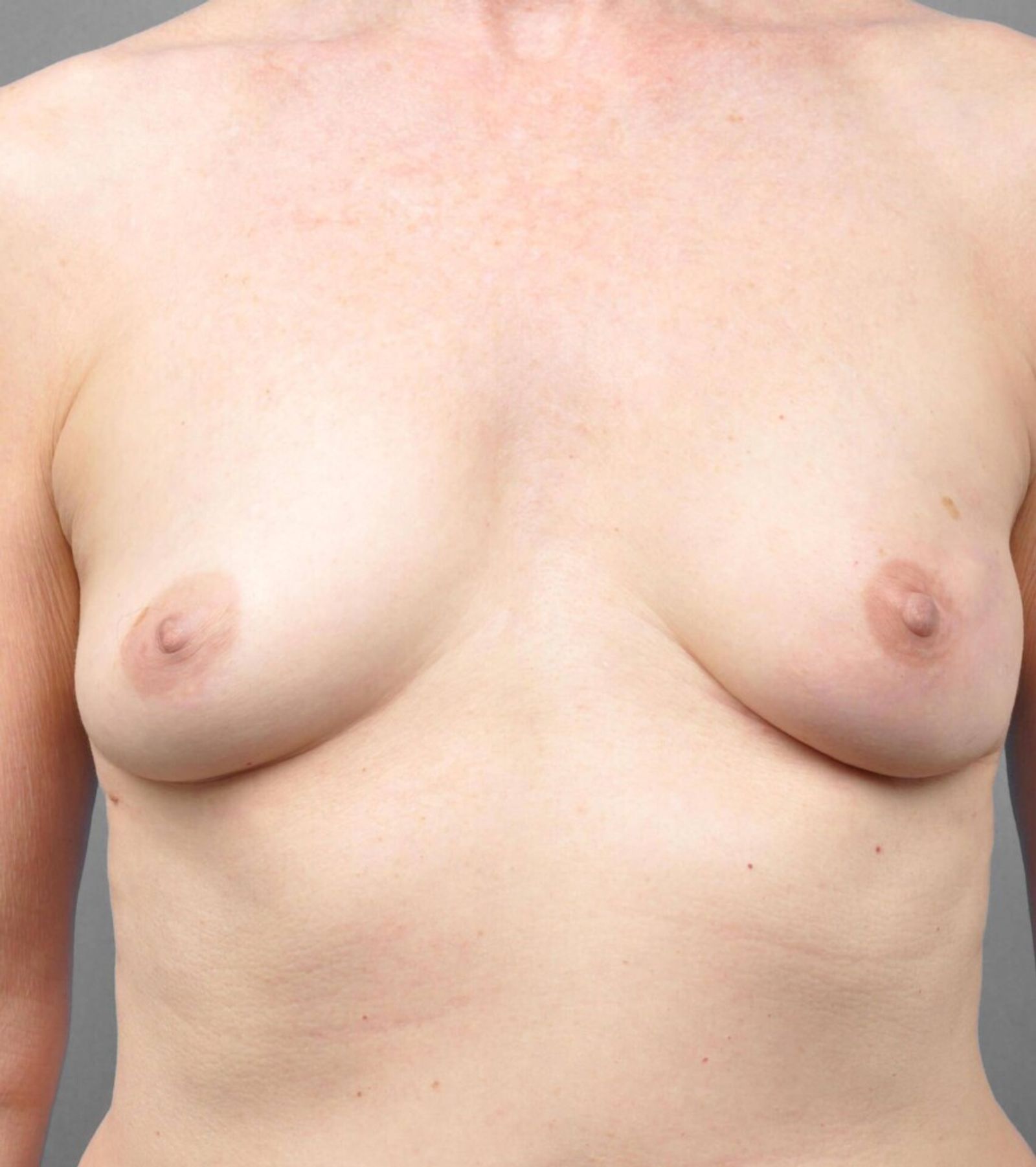
Drag the handle to compare. Click anywhere to jump.
Additional views
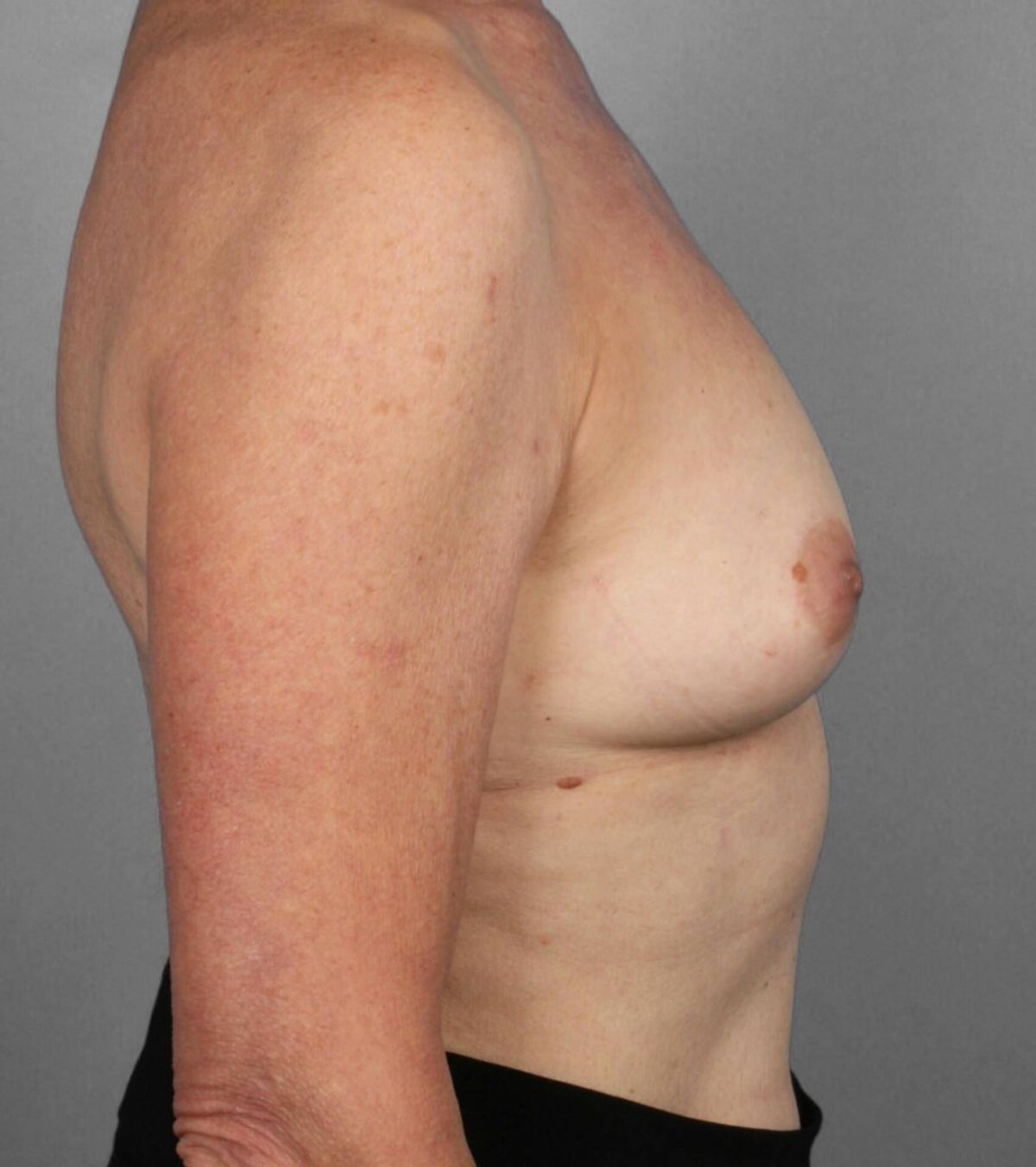
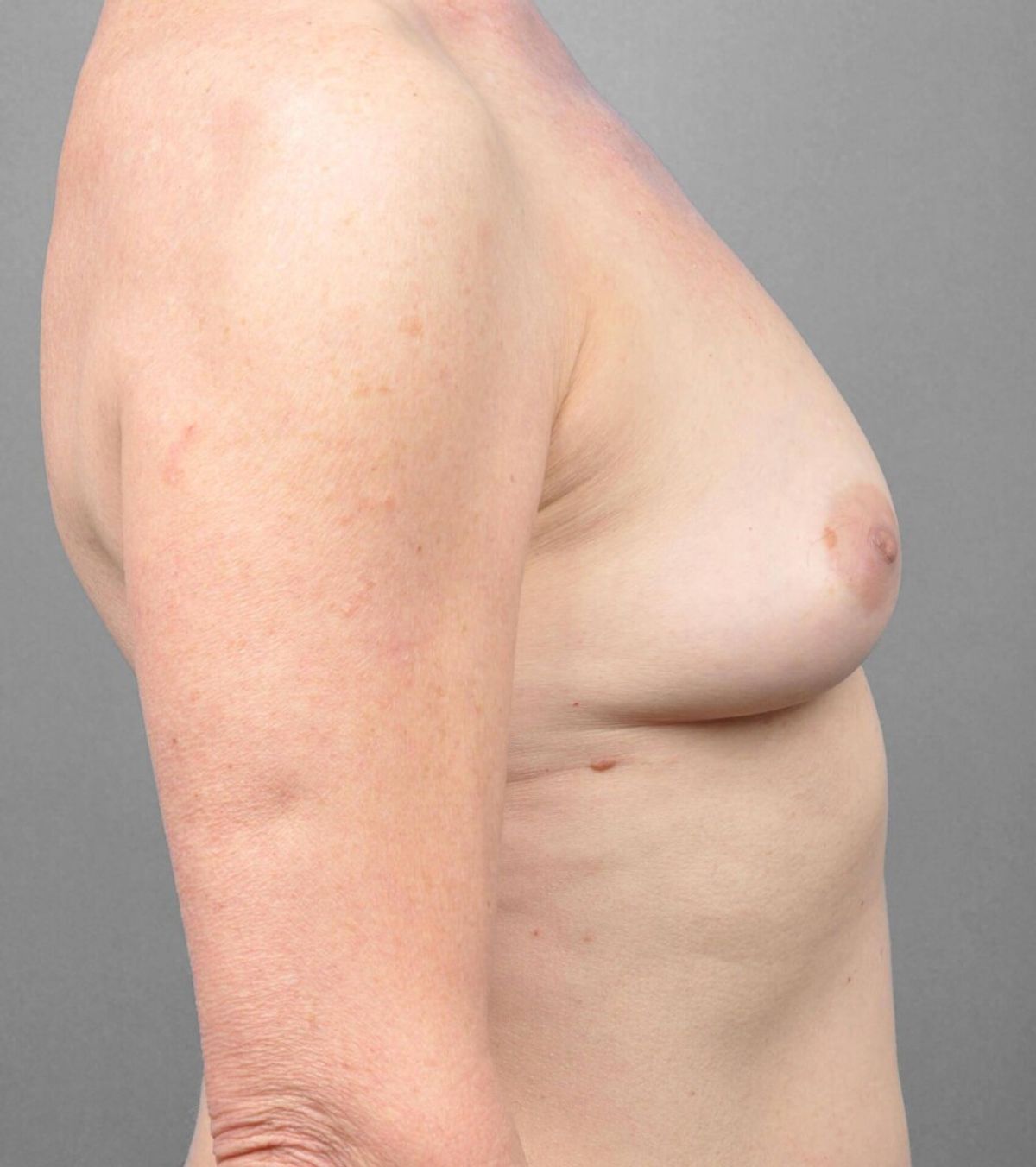
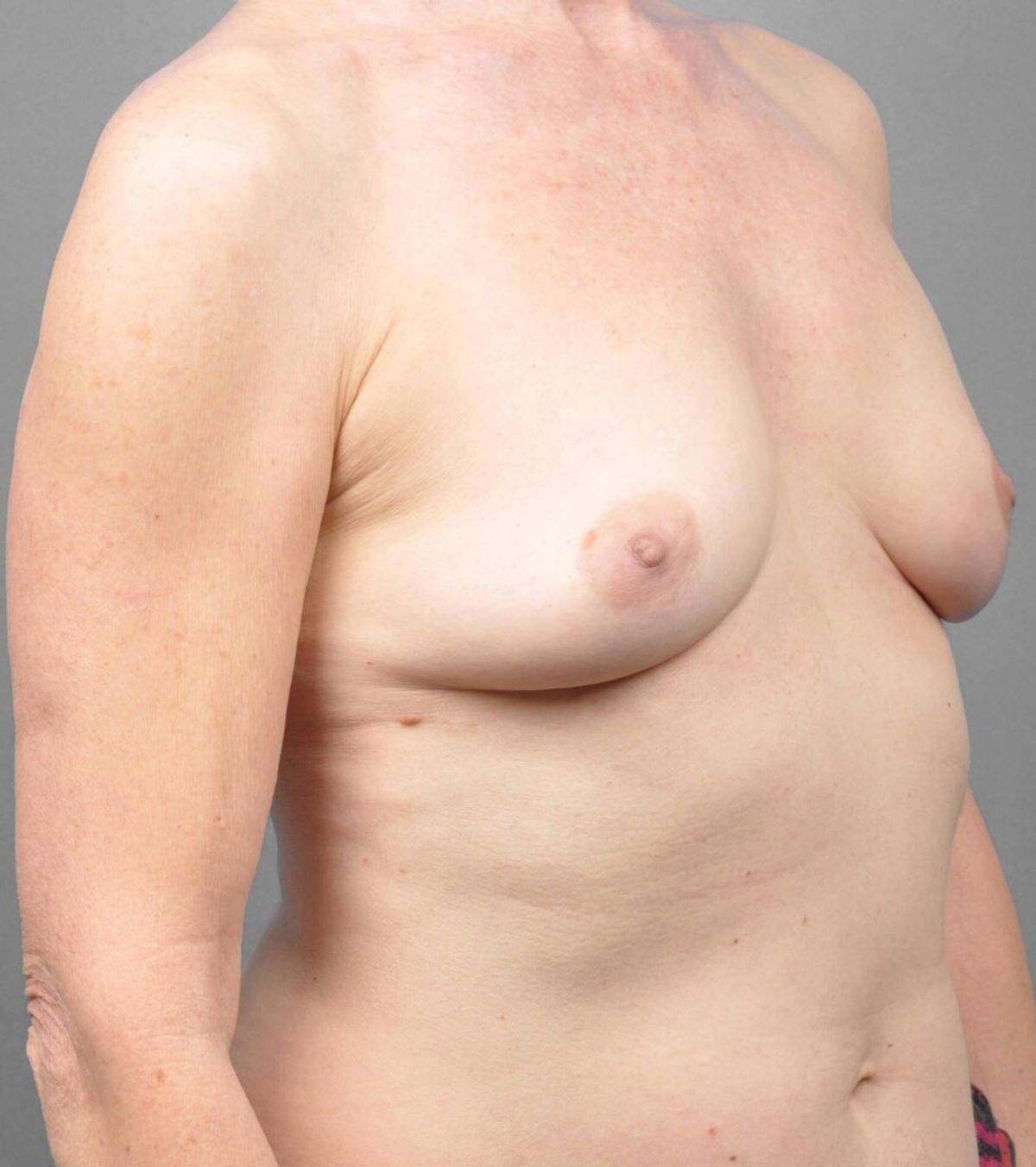
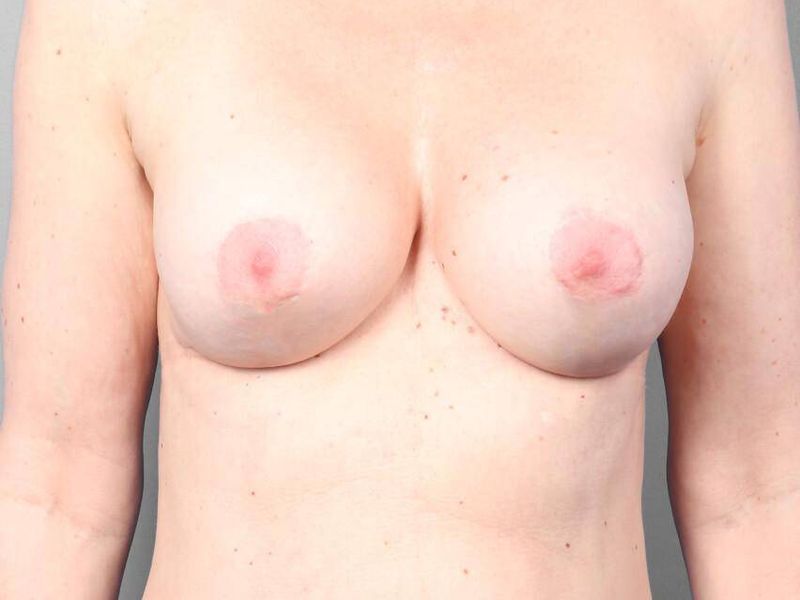
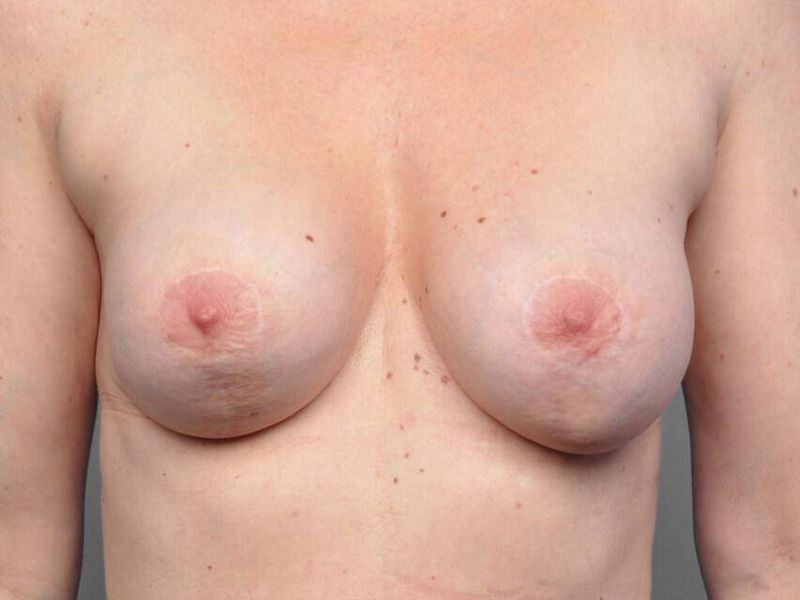
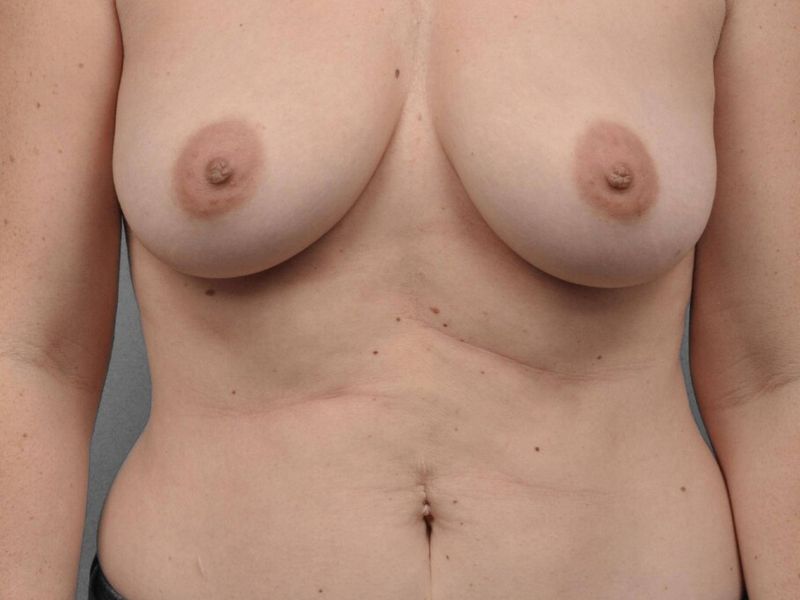
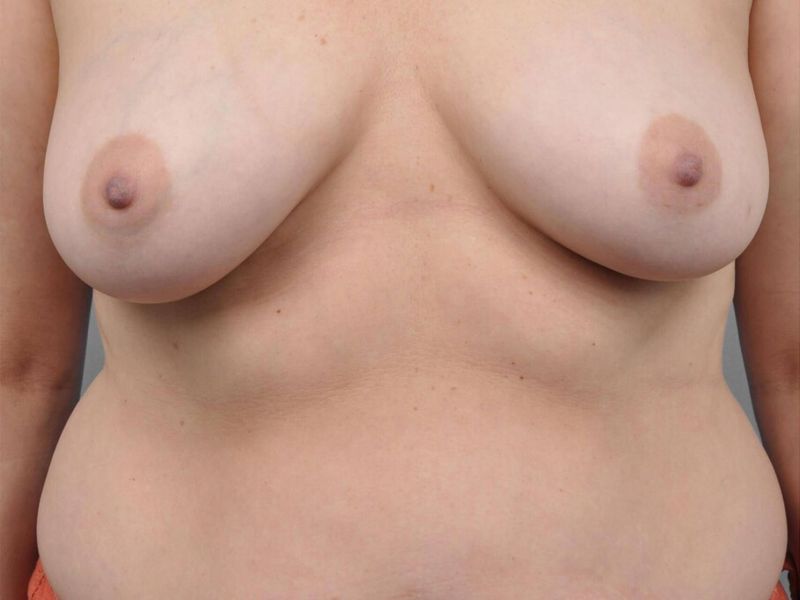
This 63-year-old patient from Toronto, Ontario was diagnosed with breast cancer on her left breast. She underwent a nipple-sparing mastectomy with Dr. Cassileth's One-Stage Breast Reconstruction. Dr. Cassileth used 150cc silicone implants and added fat grafting to her breasts dur
Continued care
Recommended aftercare, skincare, and MedSpa services for Fat Grafting Breast Reconstruction.
- No pressure on the reconstructed breast for 3 weeks — graft survival depends on tissue contact preservation
- No bra with underwire for 6 weeks
- Walking encouraged; cardio at week 4
- Liposuction donor sites: compression garment for 4–6 weeks
- Hyperbaric Oxygen Therapy to support healing when recommended
- SkinCeuticals C E Ferulic on liposuction incision site scars
- Body hydration protocol on donor sites
- SPF 50+ on all scars for 12 months
- Hyperbaric oxygen therapy when recommended — supports graft survival
- Indiba radiofrequency on donor sites
- LED light therapy to reduce bruising
- Coordination
Follow-up imaging schedule coordinated with the oncology team.
Post-mastectomy patients stay on a long-term surveillance pathway.
- Aftercare
Priority lymphatic drainage starting week 1.
Lymphatic disruption from axillary work makes early drainage more valuable.
- Aftercare
Activity progression coordinated with PT, formal check-in scheduled for week 4.
Older patients benefit from a guided return-to-activity plan.
Why this approach
The decisions that shaped this surgical plan.
- Approach driven by the oncologic priority first: incisions and tissue handling chosen to give the oncology team the access they need, then to set up the cleanest reconstructive canvas.
- Unilateral case, the contralateral side was reviewed pre-op for symmetry goals. The technique was selected to match the untreated side in volume, shape, and position.
Pre-op preparation
What to do before surgery. Specific to this case.
- Stop NSAIDs, aspirin, and high-dose fish oil two weeks before surgery; the surgical team provides a full medication list at the pre-op visit.
- Nicotine in any form, cigarettes, vapes, patches, gum, paused six weeks before and six weeks after surgery. Nicotine narrows blood vessels and slows wound healing.
- Arrange button-front or zip-front tops for the first three weeks, overhead reaching is restricted. A drain holder or apron is provided.
- Confirm a driver for surgery day and a companion who can stay through the first night.
- Pre-op coordination with the oncology team confirms imaging, biopsy results, and any neoadjuvant timing. The surgical team owns this loop.
- Internal medicine sign-off, and cardiac workup when indicated, completes a few weeks before the surgical date.
Recovery timeline
Milestones specific to this case. Individual recovery varies.
- Day 1–7
First week prioritizes drain care, walking short distances, and avoiding any overhead reaching. Multi-modal pain control keeps narcotic use brief.
- Week 2
Walking distance doubles. Showering rules relax. Compression garments transition to the long-wear schedule.
- Week 4
Activity ramps slower than average. PT check-in at week 4 anchors the next phase.
- Week 6
Most physical restrictions lift. Return to strength training, full-impact cardio, and overhead lifting.
- Month 3
Coordinated oncology and surgical check-in. Reconstruction shape and feel begin to mature.
- Month 6
Mature result. Patients commonly schedule the final phase of staged reconstruction here.